Why a Self-Directed Roth IRA Might Be Right for You

There are some misconceptions about Roth IRAs that may cause some investors to shy away from them but these retirement plans have some positive attributes to consider.
1 – Tax-free distributions.
Your contributions are taxed when they go into the plan and are distributed tax free.
2 – Unlike Traditional IRAs,
you can continue to contribute (if you meet all other requirements) after you reach age 70 ½. For people with self-directed retirement plans, this is excellent news since you may continue to build up your alternative assets within the Roth IRA for as long as you wish.
3 – No required minimum distributions during your lifetime.
If you’ve built up enough of a nest egg otherwise and don’t need to pull from your self-directed Roth IRA, all the better!
4 – Higher-income earner can derive benefit from a Roth IRA.
The income limits for 2015 Roth IRA contributions begin at $116,000 for an individual and $183,000 for couples; the income cap for conversions was removed in 2010 so that anyone can convert a Traditional IRA to a Roth IRA.
(We recommend you discuss a conversion strategy with your tax professional or financial adviser to make sure you are getting the most benefit out of a conversion from a Tradition to a Roth IRA. There will be a tax hit at the time of the conversion but depending on how long an investment road you have ahead, it could be offset by savings down the road.)
5 – Roth IRA conversions are reversible.
If you suspect you will be in a lower tax bracket when you retire, or you want to pay taxes on those funds later rather than sooner, you can “re-characterize” your Roth IRA conversion by October 15 of the following tax year without penalty. Talk to your financial adviser about this if you feel this situation applies to you.
As always, we invite you to talk about your self-directed Roth IRA with our professionals at Next Generation Trust Services. We offer guidance and support for individuals who are self-directing their retirement plans—be they Traditional or Roth IRAs, SIMPLE or SEP IRAs and other plans. We ensure that you are complying with IRS guidelines regarding alternative assets allowed within these plans and provide all the necessary transaction support and reporting.
Get started on controlling your future today — download our informative white paper, then contact us to get started (with the self-directed IRA of your choice) at Info@nextgenerationtrust.com or (888) 857-8058.
Jaime Raskulinecz Interviewed by Todaysleadingwomen.com!
 Our own Jaime Raskulinecz, CEO of Next Generation Trust Services, was recently interviewed by Marie Grace Berg of todaysleadingwomen.com on the topic of helping clients shape their financial future with Self-Directed Retirement Plans.
In the interview Jaime discusses ways to empower clients with the knowledge needed to proactively shape their financial future using Self-Directed IRAs as a powerful tool for saving for retirement.
CLICK HERE TO LISTEN TO THE INTERVIEW
Also, check out the fantastic infographic below originally included in the interview about Jaime taking you through the journey to becoming a successful entrepreneur along with her top 3 bits of business advice! Great stuff!

The High Cost of Social Security
High-income earners: are you paying more into Social Security than you’re getting out? The answer is probably “yes.”
 Even though today’s workers are working longer, their lifetime payroll tax contributions to the Social Security system are likely to exceed the amount of Social Security benefits they will later receive. This is especially true of high-income earners, as reported in an article in the Journal of Retirement. This makes it even more important for people in certain tax brackets to make sure they are maximizing their retirement income in other ways—such as developing a broader retirement portfolio in a self-directed retirement plan.
Social Security isn’t what it used to be, plain and simple—it was devised at a very different time in our country and society. We are working longer, that’s true … but we’re also living longer with every generation, there are millions of baby boomers coming of retirement age (and fewer Gen Xers and millennials paying into the system), and the fund is drying up. According to Sylvester Schieber, author of the article “Social Security costs in the larger context of retirement savings,” the net cost of participating in Social Security for an average worker today is roughly five years of their lifetime earnings. Ouch.
Mandatory Participation
Mandatory participation in the Social Security system is getting more expensive for those high-earning taxpayers in particular. First of all, for 2015 the first $118,500 of earnings is subject to the 12.4% payroll tax (evenly split between employers and employees) to fund Social Security retirement, disability and survivor benefits. That’s a 1.7% increase from 2014.
High earners are stuck between the rock of contributing into the Social Security system and the hard place of decreasing benefits ROI. Even “medium” earners—averaging about $40,000 annually—will lose. Here are some sobering figures to consider from Schieber’s article:
- A very low earner who retired last year at age 65 is expected to receive $28,336 more in lifetime benefits than the cumulative value of taxes paid on his earnings (he will come out ahead by $28,366 over what he paid in).
- A single male of the same age who was a medium earner over his career will have a net loss of $85,110 from participating in Social Security—the equivalent of 2.1 years of his average indexed lifetime earnings used to determine his benefits.
- A high-earning male is expected to lose nearly $196,500 between what he contributed and his lifetime benefits.
- A single-earner couple is the only one in the medium-earner category to come out ahead; their expected lifetime benefits are in excess of the value of taxes equal to $151,131, or 3.7 years of average earnings. This is due to the value of spousal and survivor benefits for a non-working spouse.
- Maximum earners ($98,750 in average annual earnings) will have a net lifetime loss of $378,171 for a single male; $340,354 for a single female (longer life expectancy), and—hold on to your wallets—$665,582 for a married couple where both spouses are maximum earners. (The single-earner married couple breaks even in this category.)
Many people are taking a fresh look at their “claiming strategies”—when to start collecting Social Security and how to maximize their benefits. We’ll leave that to the financial planners and accountants.
Boost your investment ROI through self-direction
When it comes to building up a retirement portfolio of tax-advantaged investments, self-directed IRAs, SIMPLE IRAs and SEP IRAs are an excellent strategy for certain individuals—those who understand alternative assets, are knowledgeable about traditional and nontraditional investments, and wish to make their own investment decisions. The ability to offset the anticipated income deficits of Social Security contributions vs. benefits by including non-publicly traded assets in their self-directed retirement plans will serve those retirees well. Investments such as real estate, hedge funds, precious metals, commodities and private placements can lead to a more lucrative nest egg that helps cushion the blow of what it really costs many Americans to pay into the Social Security system.
If you’re thinking that self-direction is the right retirement strategy for you, Next Generation Trust Services makes it easy to research the options and open an account. Plus, our professionals are able and ready to answer your questions about self-directed transactions and the types of investments allowed or prohibited from these retirement plans.
More Info on Self-Directed IRAs HERE
Contact us at Info@NextGenerationTrust.com or (888) 857-8058.
Get Your Whitepaper on Self-Directed IRAs HERE
Foreign Real Estate
As Relations with Cuba Warm, are Real Estate Investments There On Your Self-Directed Horizon?

President Obama and Raul Castro are shaking hands, taking photos and talking about normalizing relations between our countries. For investors with self-directed IRAs, there could be potential to include Cuban real estate as part of their retirement portfolio. After all, all types of real estate are allowed in self-directed retirement plans (real estate investments comprise about 50% of all self-directed assets) and this includes foreign properties. Many investors already have real estate holdings in Central America and Europe in their plans—vacation and rental properties, farmland and plantations among them.
Depending on how things go with Cuba, it could open up investment opportunities for savvy self-directed investors who are willing to do their research. Apartments, raw land, or shares in a hotel, marina or shopping mall could be included in a self-directed IRA.
Offshore investments take a lot of consideration and research time. For instance, you have to find out about:
- Tax laws abroad as well as the implications for your US taxes.
- Local laws surrounding a property title being held in the name of a self-directed IRA.
- Country’s banking system and how it will affect your property investment.
- What it’s like to conduct real estate transactions in a foreign country.
- How to go about finding tenants, property managers or contractors.
You’re also wise to make sure the country or region is stable (politically, environmentally, socially) and well worth the investment over time.
Purchasing shares of foreign property
For investors who don’t have enough funds in their self-directed accounts to purchase the property on their own, they can partner with other investors to make the deal; each self-directed retirement account purchases a specified interest in the property and these details must be worked out advance. Although the account administrator will handle all the necessary paperwork, the details and instructions come from the account holder, so it’s crucial that you truly understand all the steps you must take, taxes and insurance you’ll pay, or any other expenses related to the offshore property.
Rules surrounding real estate in your IRA
As with all real estate assets, all expenses, maintenance, taxes and insurance are paid from the self-directed IRA and all profits are returned to the IRA (the income from the property is tax deferred). Also, you may not, as the account holder, use the property for your primary residence, your own vacation home or as a business office (prohibited transactions). However, once you reach age 59-1/2 or older, the age at which you may legally start taking distributions from a retirement plan, you can withdraw your real estate from your IRA in order to use it as a primary or second /vacation home without a penalty. Depending on the type of IRA that held the real estate, there may be taxes associated with the process so again, do your research and consult your self-directed IRA administrator for guidelines.
Next Generation Trust Services does not provide investment advice but we do recommend that before you send us instructions about a foreign property investment, that you consult a financial professional or tax advisor with experience in offshore real estate transactions and banking outside of the U.S. Because this investment strategy has grown so popular over the years, the IRS offers information regarding precautionary measures against offshore schemes and options available to taxpayers with offshore interests.
If you have your eye on property in another country, we’re here to help in any way we can.
Contact our professionals at Next Generation at Info@NextGenerationTrust.com or (888) 857-8058.
When you make the investment in your self-directed retirement plan, we want to see pictures of your offshore real estate when we help you process this exciting transaction … or perhaps a Cuba Libre to celebrate your diverse retirement portfolio.
CLICK HERE for More Info On Investing in REAL ESTATE as Part of your Self-directed IRA
Fair Market Values – Part 2
 Fair Market Values – What Types of Contributions do You Make to Your Self-Directed IRA?
 Fair Market Values – What Types of Contributions do You Make to Your Self-Directed IRA?
In our previous post about FMVs we talked about how the values of IRAs have risen since the Great Recession. Today we’ll look at how IRA values break out by account holders’ income levels as well as the types of contributions they are making.
FMVs based on all types of contributions
The data from Statistics of Income, the largest federal statistical organization, show that in 2012, when these figures were reported, approximately 5.5 million taxpayers funded their Roth IRAs as opposed to 3.7 million to Traditional accounts. SEP and SIMPLE IRA plans had much lower numbers of contributors that year (about 2.6 million combined). These figures were compiled across all types of contributions: direct contribution, conversions (of one plan type to another) or by rollovers from other account. In 2012, it appears that rollover contributions were very popular.
Let’s parse the numbers a bit:
The number of taxpayers that made rollover contributions to Traditional IRAs was 3.9 million. This far exceeded the number who made rollover contributions to Roth IRAs, which was under 250,000.
This was reflected in the dollar amounts – approximately $301 billion rolled over into Traditional IRAs in 2012 against a relatively small $4.4 million into Roth IRAs that year.
It is possible that when the IRS regulations about rollover and adjusted gross income limits changed in 2012, this had an effect on contribution activity. An individual’s earnings dictate how much he/she may contribute annually so as always, Next Generation Trust Services advises our clients to consult their tax professional about which type of IRA makes the most sense for them in the long run.
IRA Fair Market Values by taxpayer age
The numbers for direct contributions show a different side of the retirement savings issue and direct contributions (not rollovers nor conversions).
The SOI data shows that older taxpayers, ages 50 to 70, made the highest dollar amount of direct contributions to their retirement plans in 2012; taxpayers between the ages of 30 and 49 contributed much less than their older co-workers. These are for Traditional and Roth IRAs.
Taxpayers in the combined group of ages 30-49 added about $11.7 billion to their IRAs in 2012.
Compare this figure to that of the 50-70 age group, which contributed roughly $18.1 billion to both types of retirement accounts. This is not really that surprising, given that so many Americans lag behind in their retirement savings and may wake up and start catching up as their retirement age approaches.
When split into those in their 30s and their 40s, the Traditional IRAs saw much more in terms of direct contributions by the older group but the Roth contributors were effectively even.
The taxpayers ages 30-39 funded their Traditional IRAs with $1.5 billion in direct contributions; those in the 40-49 age group contributed nearly $2.6 billion to theirs—so their savings activity ramped up in Traditional IRAs.
However, the figures are nearly the same in 2012 when it came to funding Roth IRAs for both age groups: $3.3 billion for the younger set and nearly $3.4 billion for the older group.
FMVs by income levels
It’s no surprise that the higher a taxpayer’s adjusted gross income, the higher the fair market values of their retirement plans. What is interesting from the SOI report is that regardless of income level, Traditional IRAs were the clear winners in terms of year-end fair market value. In some brackets, that figure is as high as 10 times, meaning that the fair market values of the Traditional IRAs were 10 times (or more!) higher than those of Roth IRAs for that income group. The biggest discrepancies start showing up in the $100,000 adjusted gross income level.
For those of you who love statistical tables and want to read more about the SOI report, go to the IRS website page that has all the details.
How are you doing with your IRA contributions?
It’s a good idea at any age and income level to start saving for retirement (or making those catch-up contributions). With a self-directed IRA you can not only bolster your retirement savings through your direct or rollover contributions (our professionals will explain how), you can also include many alternative assets that can help you grow a more lucrative portfolio. For savvy investors who know and understand these nontraditional investments—real estate, precious metals, commodities, private placements, hedge funds and much more—you can build a diverse, tax-advantaged portfolio. Self-directed retirement accounts can be Traditional or Roth IRAs, SEP and SIMPLE IRAs—you can even self-direct a health savings account.
Contact Next Generation Trust Services to discuss the many options and benefits of this retirement wealth-building strategy and build up your account’s fair market value with a self-directed retirement plan.
For More Information About Self Directed IRAs, CLICK HERE
FMVs and IRA trends
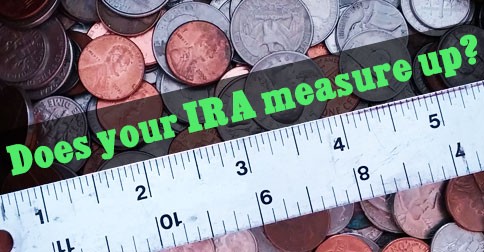
Fair Market Values of IRAs – How Does Yours Measure Up?
 Fair Market Values of IRAs – How Does Yours Measure Up?
Fair market value is the value of all investments within an individual retirement arrangement (IRA) at the end of the calendar year. This is reported to the IRS on Form 5498 by the IRA administrator every year.
Statistics of Income
The largest federal statistical organization, called the Statistics of Income (SOI) released information on 2012 tax data from IRS reporting, including a section on IRA fair market values (FMV). The report states that the FMV for retirement plans has been rebounding since the 2008 Great Recession, when so many investors saw the values of their investments plunge. The upward trend was cited with statistics from year-end 2008 to year-end 2011. It’s been quite a seesaw of values since 2005, when FMVs of all types of IRAs was $3.4 trillion.
- FMV of all IRA types grew to $4.7 trillion by year-end 2007;
- By year-end 2008, FMVs had dropped 23 percent in one year, down to $3.7 trillion;
- 2009-2011 saw small, steady increases;
- And by the end of 2012, FMV increased to $5.3 trillion—much higher than they were before the 2008 nosedive.
Types of IRAs
The study further breaks down FMVs by type of IRA. Traditional IRAs surpassed Roth IRAs by about 10 times, with investments values at $4.6 trillion vs. $403 billion at the end of 2012. However, the data also revealed that Roth IRAs are gaining in popularity and received more in regular contributions that year than did their Traditional counterparts. Those 2012 contribution amounts were quite disparate: $17.7 billion as opposed to $14.1 billion.
Here’s another wide discrepancy between fair market values in 2012 for the retirement plans used by business owners and the self-employed: the year-end FMV for SEP IRAs was $272 billion, which dwarfed the $72 billion for SIMPLE IRAs.
In our next blog post, we’ll look at how the FMV numbers stack up when parsed by adjusted gross income and contribution types.
Have a question about contribution limits or types of investments you can include in your self-directed IRA? The knowledgeable staff at Next Generation Trust Services can answer your questions and direct you to the resources to ensure you are investing safely within IRS guidelines.
SECRETS ABOUT SELF-DIRECTED INVESTMENTS YOUR BROKER DOESN’T WANT YOU TO KNOW: Get Your Whitepaper Here
Contact us at Info@NextGenerationTrust.com or (888) 857-8058 to discuss your self-directed retirement plan needs.
Radio Interview with Jaime Raskulinecz – Equity Funding
 Our CEO, Jaime Raskulinecz, was interviewed about equity funding on The Art of the CEO radio show
As many of you know, private equity funding is an alternative asset that accredited investors may include in their self-directed retirement plan. Jaime Raskulinecz, CEO of Next Generation Trust Services, took that message to internet radio as a featured guest on The Art of the CEO on BlogTalkRadio. Her interview will air live on May 19, 2015 at 2:00 p.m. (Eastern) at https://www.blogtalkradio.com/theartoftheceo.
Jaime began by explaining the many options and benefits of self-direction, the various types of nontraditional investments allowed in self-directed plans, and what Next Generation does as the account administrator. The interview then covered private equity investments in startups through self-directed retirement plans.
Jaime and interviewer Bart Jackson discussed who may make these investments in early-stage companies (accredited investors) and the expectations people may have about making Mitt Romney-level returns on those investments. The fact is, many individuals may qualify as accredited investors without Gov. Romney’s enormous fortune … whether or not they see the same types of returns depends on many factors.
Crowdfunding
Jaime explained that when Title III of the 2012 JOBS Act is implemented, non-accredited investors will also be able to jump into the equity funding pool—and may have their self-directed IRAs invest in startups in exchange for equity. This will also give entrepreneurs a much bigger pool of potential investors and give more people a chance to support early-stage enterprises. She also explained the difference between this type of investing and the “friends and family” investing on popular crowdfunding platforms such as Kickstarter or Indiegogo). For a deeper look at this topic, download our white paper on crowdfunding.
Do the Research
As with all self-directed investments, Jaime strongly encouraged listeners—as she does her clients—to always do thorough research about any target investment (and any equity funding or crowdfunding platform as well). She talked about the inherent risks involved in venture capital investments and the importance of understanding what is involved in the startup company.
Look for a write up about Jaime in “People You Need to Know” on the BartsBooks Blog at https://www.nextgenerationtrust.com/radio-interview-with-jaime-raskulinecz-equity-funding/. You can also find other business-related reading material at BartsBooks.com.
For everything you need to know about self-directed retirement plans, contact the professionals at Next Generation Trust Services at
Info@NextGenerationTrust.com or (888) 857-8058.
Ready to open a self-directed retirement account? We make it easy with all the forms you need here.
Arizona – Find Your Retirement Place in the Sun
 Arizona— “The Grand Canyon State” — draws retirees in with its warm climate and low-cost housing. The state’s desert climate ranks it high on many lists of top places to retire; Mesa and Tucson made Forbes 2015 Top 25 Places to Retire List.
But Arizona itself is anything but retiring. Whether you are a fan of the great outdoors or would rather stay indoors, there are a multitude of reasons to come to this—one of the original—sunshine states. In fact, Yuma, Arizona gets more sunshine than any other location tracked by the U.S. government. Phoenix and Tucson are nearly as bright.
In Arizona, you can enjoy local culture (over 20 Native American tribes are represented), watch some of the world’s biggest sporting events (three Super Bowls have been played here and many major league baseball teams hold spring training here), or experience a world of culinary treats (Scottsdale Culinary Festival). And, with no snow to shovel, retirees have time to perfect their golf swing at more than 320 courses.
If you want a locale with affordable housing, a rich heritage and many different arts and leisure activities, you’ve come to the right place.
 Personal Well-Being
 Personal Well-Being
According to the Gallup-Healthways Well-Being index, Arizona residents are healthy. In fact, the state scored much higher than the national average in terms of personal well-being, earning the second-highest wellness scores in the country just behind Hawaii. For many, the climate and dry air offers a respite for allergy sufferers and those with asthma. That’s nothing to sneeze at.
Cost of Living in Arizona
Overall, the cost of living in Arizona is lower than the nationwide average and the quality of life is high. According to CityRating.com, the average yearly pay in Arizona is also slightly lower at $45,921. However, the consumer price index (CPI) of 221 in Arizona is 5.15% lower than the U.S. city average CPI of 233. Sales tax is 5.60%. Added bonus: There is no tax on Social Security income and there is no inheritance tax, gift tax or estate tax.
The median home value is $178,000 and median rental is $1,080. Although you may run the air conditioner more, the cost of heating your home will be low. And, traditionally it costs less to cool your home than to heat it.
Major Cities in Arizona
Arizona has five distinct regions and boasts dozens of national and state parks, including the Grand Canyon. The state’s landscape is as diverse as it is beautiful, from the desert to the mountains and pine forests. The White Mountains in eastern Arizona and Flagstaff, which is two hours from Phoenix, offer skiing.
Some of the cities that retirees flock to are:
Phoenix
America’s sixth-largest city is the gateway to the Grand Canyon and steeped in history, with real cowboys, rugged mountains and cactus so large, most people stop and take a picture. The Phoenix metropolitan area boasts the highest 2007-2012 growth rate of residents age 65+ as a percentage of total population. The area has more than 200 golf courses. Popular retirement communities located within the region are Sun City and Sun City West.
Tucson
Tucson ranked #7 on Nerdwallets’ list of America’s Fastest Growing Retirement Places. With warm weather and some of the country’s best golf courses, the Tucson metro area is a great place for retirees. The city is also home to the University of Arizona, which offers continuing education courses to adults ages 50+ at the Osher Lifelong Learning Institute.
Mesa
Mesa is the third-largest city in Arizona, after Phoenix and Tucson, and one of the fastest-growing cities in the United States. A 15-minute drive from Phoenix, it is great place to live and offers excellent neighborhoods, friendly people and an overall great urban experience. Mesa is home to numerous higher education facilities including the Polytechnic campus of Arizona State University.
Sedona
Sedona, located in North Central Arizona, is known for its Red Rock topography. Sedona’s natural beauty of Sedona is unparalleled and is the perfect setting for outdoor pastimes such as golf, tennis, hiking, walking and gardening. Residents and visitors alike find peace, quiet and dry meditative air in its desert climate.

Arizona with its dry climate, stunning vistas, cosmopolitan cities and historical venues offers retirees a truly unique and wonderful lifestyle! It also makes it an ideal location for real estate investments through a self-directed IRA. Vacation properties abound and are a popular asset to include in a self-directed retirement plan as investment property.
As the self-directed account holder, you may not use the property for your primary residence or your own vacation home; however, any time after age 59-1/2, you can withdraw your Arizona real estate from your IRA to use it as a primary or second /vacation home without a penalty. As with all self-directed investments, we recommend you do your research about any alternative asset you are considering. And, as always, the professionals at Next Generation Trust Services are available to answer your questions about self-directed IRAs and the types of alternative assets you may include in these retirement plans.
Contact Next Generation at (888) 857-8058 or
Info@NextGenerationTrust.com, for more information about including real estate in your self-directed IRA.
Expert Interview with Jaime Raskulinecz About Self-Directed Retirement Plans
 The best way to retire the way you want to is to educate yourself.
Jaime Raskulinecz of Next Generation Trust Services says individuals should take advantage of retirement professionals who are trained to help people from all backgrounds retire the way they want to.
Here, Raskulinecz shares some tips about self-directed retirement for those interested in maximizing their golden years.